
Featured archive puzzle
Time Signal
Restore a real historical photograph, then uncover the people and place held inside the frame.
THE ANTI-SLOP DESK
The phrase that launched a thousand memes — and a whole movement against AI slop.
A critical field desk for recognizing mass-produced synthetic content—and protecting the people, sources and choices that make culture worth paying attention to.
Read the original phrase and game guide →Independent fan site. The original human prompt exchange is at youraislopbores.me.
FREE EDITORIAL TOOL
Check original value, sources and usefulness with a 100-point scorecard. Keep your progress on this device and return after an edit.
🎨 OK fine, here's one AI that doesn't bore us.
Unlimited AI image generation — free, no sign-up, no watermark.
Free unlimited AI image generator →If you've been searching for "youraislopboresme" or "your ai slop bores me game", you've come to the right place. "Your AI Slop Bores Me" is a human-powered browser game and prompt exchange created by Mihir Maroju. Fast Company reported on its wider audience and interviewed Maroju in March 2026.
The concept is simple: in Human mode, submit a text or drawing prompt and spend a credit. In LARP as AI, answer another person's prompt yourself and earn a credit. Every response comes from a person; no actual AI is involved.
Understanding what "AI slop" means is key to understanding why your ai slop bores everyone. AI slop refers to the flood of low-quality, low-effort AI-generated content — from eerily smooth Facebook images of shrimp Jesus, to Google results that read like a robot summarizing other robots, to LinkedIn posts that are three paragraphs of polished nothing.
The term builds on the centuries-old meaning of "slop" — soft mud, pig feed, rubbish. It was first applied to AI content by a poet and technologist writing under the name "deepfates", and has since become the go-to pejorative for content that looks, sounds, or reads like it was spat out by an algorithm with zero human oversight.
The phrase "your ai slop bores me" resonates because it captures something we've all felt: fatigue with AI-generated content. Every scroll through social media, every Google search — more and more reads like it was written by a machine that doesn't understand what it's saying.
Why it hit a nerve:
🫠 Universal experience — Everyone has encountered AI slop.
😤 Cultural backlash — People want authentic, human-made content.
🎯 Perfect satire — Humans pretend to be AI, not the other way around.
🚀 Human-powered premise — Fast Company reported at the time that millions came to watch people answer other people.
Ready to ask another person—or answer one? Here's how the exchange works.
Step 1: Choose a Mode
Choose Human mode when you want to ask for text or a drawing. Choose LARP as AI when you want to make a response for someone else.
Step 2: Submit a Prompt
In Human mode, write a clear text or drawing prompt, submit it, and spend a credit. The request enters the shared queue.
Step 3: Wait for a Person
Another visitor can claim your request and send back a human-made response. It may not arrive immediately; no actual AI fills the gap.
Step 4: Answer in LARP as AI
Claim another person's prompt, make the requested text or drawing yourself, and submit it. Completing the response earns a credit.
Step 5: Play Again
The credit loop keeps asking and answering connected. Current balances, queues, and controls can change, so follow the rules shown on the original site.
Not all AI-generated content is created equal. Some of it is genuinely useful. And then there's AI slop — the stuff that makes you wonder if anyone actually read it before hitting publish. Here's our tribute to the worst of the worst.
Social Media
The land of endless scroll where AI-generated images of Jesus eating shrimp and babies with too many fingers reign supreme. "Shrimp Jesus" became a meme for a reason — someone fed an AI a prompt and hit generate without a single thought.
Endless Scroll of RegretSearch Results
Google's AI overviews promised to summarize the web and instead delivered confident hallucinations. Recipes with invisible ingredients. Medical advice that would make a doctor weep. History facts that never happened.
Hallucinations Included"Excited to share my learnings from leveraging synergies to drive holistic outcomes!" Cool. What does that actually mean? Nobody knows. The author certainly doesn't. But it looks impressive, and that's all that matters in the world of AI slop.
Words in Search of MeaningThe cold outreach that begins with "I hope this email finds you well" and somehow gets worse from there. AI-written sales emails are instantly recognizable — the generic flattery, the weirdly formal phrasing, the complete absence of anything that would make you want to respond.
Zero Reply Rate"Art"
AI-generated images with six-fingered hands, teeth in the wrong places, and watermarks that look like the AI was having a seizure. When everyone can generate an image, the word "artist" starts to lose meaning.
Six Fingers Standard"News"
AI-generated articles that get published because someone set up a content pipeline and forgot to check the output. Fictional quotes, made-up statistics, stories about events that never happened. Nothing says "trust us, we're journalists" like an article written by a robot that found a thesaurus.
Facts Not IncludedHuman note
We criticize systems that scale content without care because human judgment, memory, humor, and accountability are what let information carry meaning—and let someone answer for it.
Read the human alternativesYour AI Slop Bores Me is a human-powered browser game and prompt exchange. People submit text or drawing prompts in Human mode, and other people answer them in LARP as AI mode. No actual AI is involved.
In Human mode, submit a text or drawing prompt and spend a credit. In LARP as AI mode, answer another person's prompt yourself and earn a credit. Every response comes from a person; no actual AI writes the answers.
Read the complete game and phrase guideAI slop is the internet's term for content that feels mass-produced, lacks any real creativity or personality, and was clearly generated by an AI model with no soul. It's the visual equivalent of elevator music — technically functional but utterly forgettable. When you see it, you just know.
Fast Company's March 2026 interview identifies the creator as Mihir Maroju and documents the human-powered premise. An early Hacker News submission exists, but its small discussion does not establish what drove the wider audience.
Read Fast Company's creator interviewThe original experience is available at youraislopbores.me. Check its live interface for current access, credit, and account rules.
Check the original gameLARP as AI is the answering side of the exchange: claim and respond to another person's text or drawing prompt yourself, then earn a credit for completing it. The name is a joke about taking the chatbot's role; no actual AI writes the response.
The human-powered premise gave AI fatigue a constructive, memorable form. Fast Company reported at the time that the site received about 50 million views in its first week and reached about 16,000 concurrent users; those are attributed March 2026 figures, not current traffic.
The original experience runs in a browser. Device support can change, so use the current interface at youraislopbores.me as the source of truth.
Open the current browser experienceThe experience contains live user-generated prompts and responses, so this fan site cannot promise that every exchange is suitable for children. A parent or guardian should review the original site's current rules and moderation before a child uses it.
Head to youraislopbores.me for the current prompt exchange. No download is required; every answer depends on another person participating.
Play the original human-powered exchange"Slop" became Merriam-Webster's word of the year because AI-generated content exploded everywhere, and people needed a word that captured exactly how they felt about it. "Bad content" wasn't enough — it needed to feel cheap, mass-produced, and vaguely nauseating. "Slop" does all that in one syllable.
Regular AI content can be genuinely useful — code, summaries, translations. AI slop specifically refers to content that's not only AI-generated but also adds zero value, has no personality, and was clearly made just to fill space. It's the difference between a helpful assistant and a content farm bot churning out garbage for engagement metrics.
AI slop shows up everywhere: the weird AI-generated images of Jesus eating shrimp, LinkedIn posts that say nothing but look polished, articles with made-up facts that sound confident, and those endless "5 tips for productivity" blog posts that nobody asked for. If it feels like it was written by something that doesn't care if you get any value from it, that's slop.
Sometimes, but no detector or stylistic tell proves authorship by itself. Check provenance, sources, specificity, and accountability instead of treating the original human-powered prompt exchange as a detector test.
Unfortunately, yes — unless we do something about it. As AI tools get cheaper and more accessible, the incentive to actually create original content decreases for some people. But games like Your AI Slop Bores Me are part of the resistance. By celebrating human creativity and making fun of boring AI output, we remind people why authentic content matters.
youraislopboresme.com is the unofficial fan hub for the viral "Your AI Slop Bores Me" experience — featuring free browser games, deep dives into the anti-AI slop movement, and a growing community of humans refusing to be bored by AI-generated content.
youraislopboresme.com features a growing collection of free browser games, including Slop Collector, Slop Runner, Circle of Truth, Human Verification and Time Signal.
Spotify says it kept 50 million slop and spam tracks out of recommendations in 2026. Here is what that number proves, what it does not, and how listeners can improve their feeds.
Read more →
Wikimedia's October 2026 report puts the human cost of AI agents in focus. What it actually found, what it didn't, and how to keep the source trail alive.
Read more →
YouTube Music's new AI labels add useful context. The next step is giving listeners practical control over what fills their recommendations.
Read more →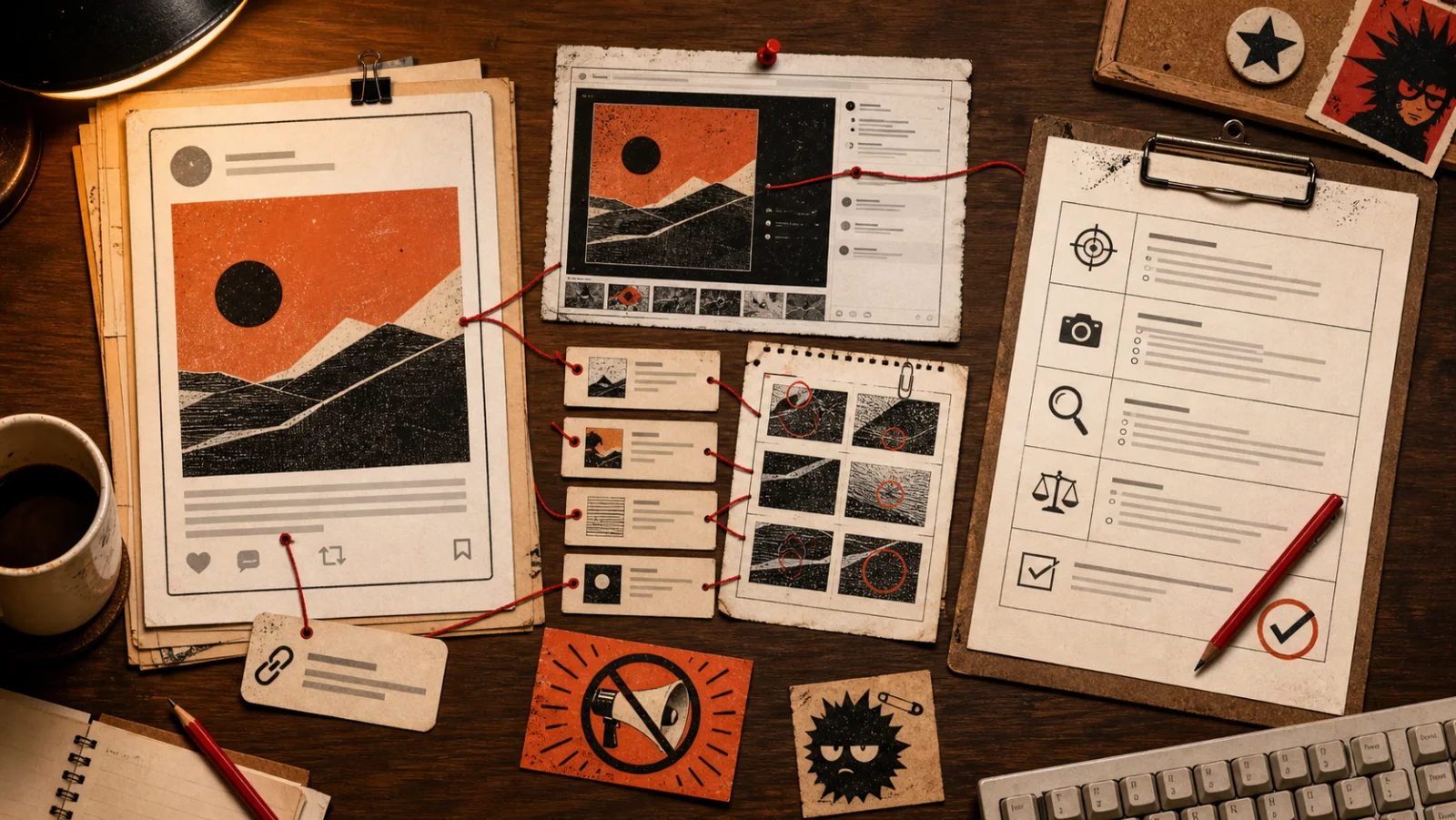
A practical workflow for documenting, reporting, and calling out AI slop without spreading the content, harassing creators, or losing the original evidence.
Read more →If you love the meme as much as we do, share it with your friends. The more people who understand the pain of AI slop, the better.
"humans make mistakes because that's what makes us human"