AI Content Fatigue: Why the Feed Exhausts You (and How to Recover)
You open your phone to check one thing. Twenty minutes later you put it down and feel… worse. Not entertained, not informed — just foggy, vaguely irritated, and somehow tired by a thing that was supposed to be a break.
That’s AI content fatigue. It’s real, it has a cause, and it’s not a character flaw. Let’s name it properly and then fix it.
What AI content fatigue actually is
AI content fatigue is the mental exhaustion that builds up from consuming a stream of machine-generated and machine-optimized content — text, images, video, replies — where you can no longer easily tell what was made by a person who cared and what was generated to fill a slot.
It’s a cousin of plain old information overload, but with a sharper edge. The old web was too much stuff. The 2026 web is too much stuff plus a low-grade uncertainty running under everything: wait, is this even real? That second layer is what makes it so draining.
Why it’s so tiring (the part nobody tells you)
Here’s the mechanism, and once you see it you can’t unsee it.
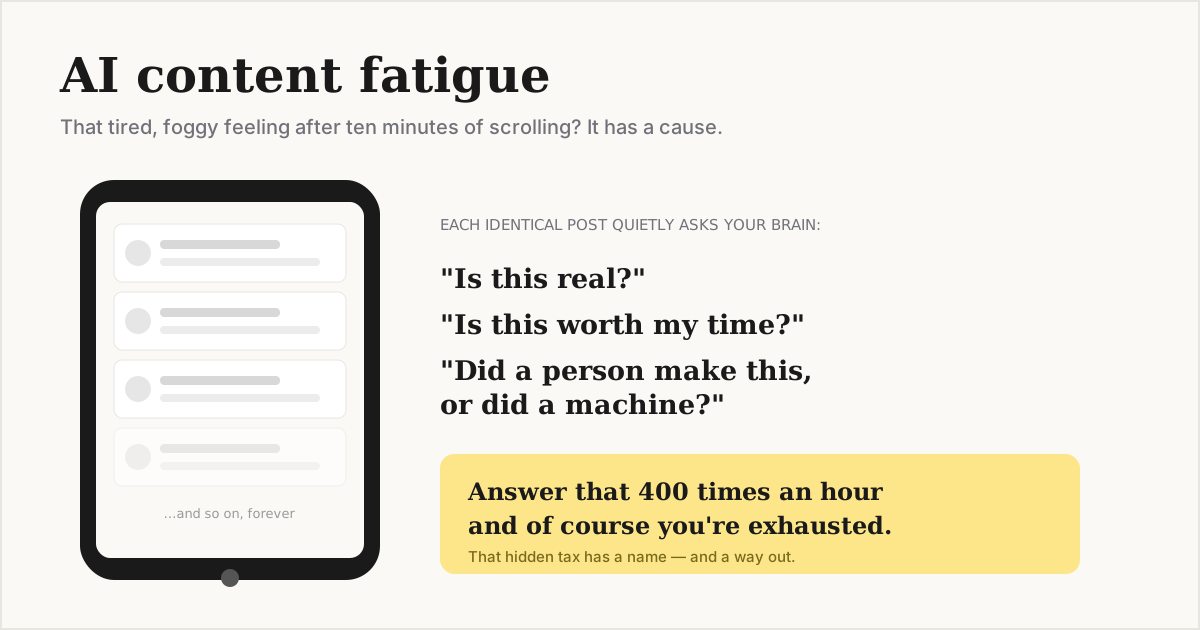
Your brain is a relentless pattern-matcher. Every post, image, and comment you pass gets a split-second appraisal: Is this real? Is this useful? Did a human make this, or a machine? You don’t do this consciously. It runs in the background, all the time, for free — when the answer is obvious.
The problem is AI made the answer not obvious. When a feed is half-generated, your brain can’t auto-sort it anymore. Every item forces a tiny, effortful judgment call instead of a free reflex. Psychologists call this kind of repeated low-stakes deciding cognitive load and decision fatigue, and the key finding is brutal: the cost isn’t in any single decision. It’s in doing it hundreds of times an hour.
You’re not tired because you read too much. You’re tired because you spent an hour as an unpaid authenticity inspector, and nobody told you you’d taken the job.
Three forces stack on top of that vigilance tax:
Sameness starves you. Language models pull toward the statistical average, so generated content trends toward the same shapes, the same tidy structure, the same agreeable nothing. Novelty is what makes the brain perk up — and a feed of averaged-out content offers almost none. You scroll faster and faster chasing a hit that never lands. (We unpack why it all feels so same-y in why AI slop feels so obvious.)
Distrust is expensive. Once you’ve been fooled a few times — a “review” that was generated, a “photo” that wasn’t real, a confident article that turned out to be hallucinated — you start distrusting everything. Defensive skepticism is a heavier way to read than open curiosity. It costs more and gives back less.
The good stuff gets buried. Every generated post that fills your feed is a human post you didn’t see. The signal-to-noise ratio collapses, so even your genuine wins feel like they took effort to dig out.
The signs you’ve got it
Fatigue creeps, so it’s worth knowing the tells. You’re probably running on AI content fatigue if:
- You scroll for a while and absorb almost nothing — your eyes moved, your mind didn’t.
- Your default assumption is “fake” before “interesting.” Everything is guilty until proven human.
- “It all sounds the same” is a thought you have constantly.
- You’ve quietly stopped reading past the first line of most things.
- Ordinary decisions feel heavier than they should by the end of a scroll session.
- Nothing online has genuinely surprised you in weeks.
- You finish a session feeling busy and empty at once.
None of these mean something’s wrong with you. They mean the environment changed and your attention is paying the bill.
The recovery plan: spot it, then starve it
You can’t fix the whole internet. You can change what reaches you and how you meet it. The goal is simple — less volume, more humans — and it works fast.
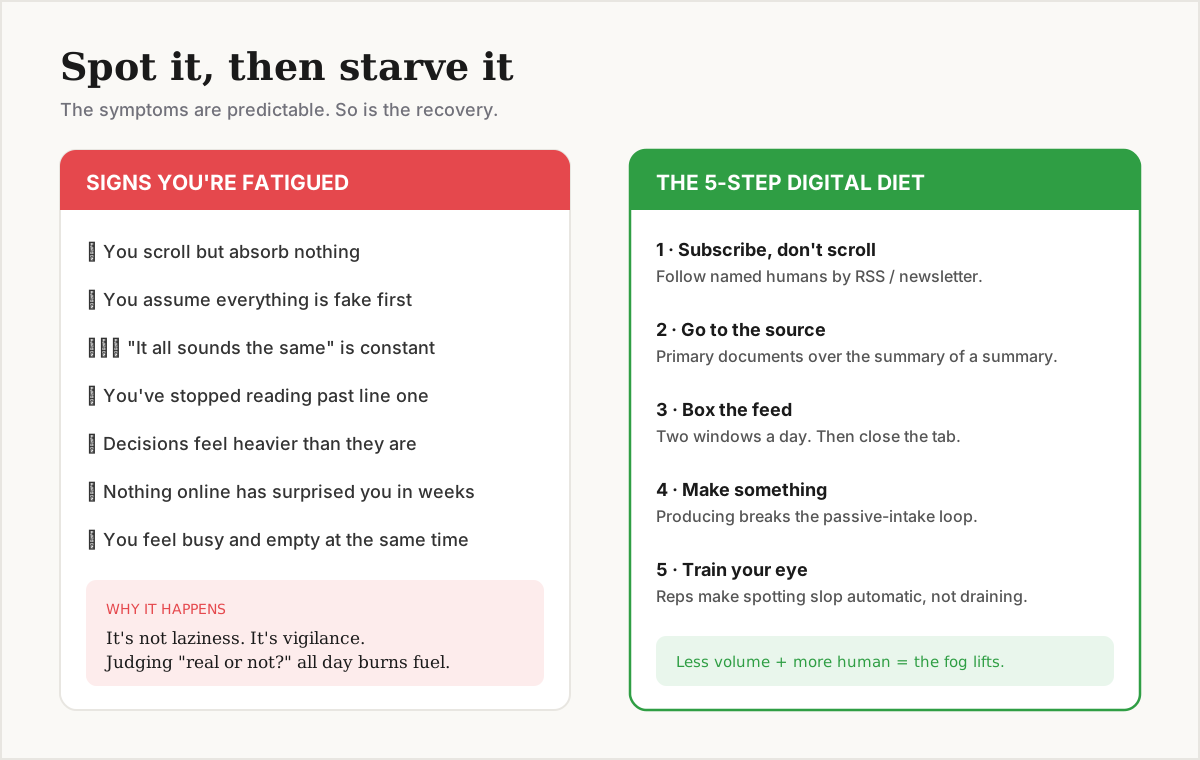
1. Subscribe, don’t scroll. The algorithmic feed is the firehose of unsorted maybe-real content. Trade it for chosen sources: follow specific humans by RSS or newsletter, build a list of people whose names you trust. When a real person is on the other end, the “is this real?” tax disappears — and your brain relaxes.
2. Go to the source. Slop thrives in the layer of summaries-of-summaries. When something matters, jump to the primary thing — the actual paper, the actual filing, the actual person who was there. Fewer hops means fewer chances for generated mush to sit between you and reality.
3. Box the feed. Don’t graze all day. Give the feed two defined windows — say, fifteen minutes at lunch and after dinner — then close the tab. Time-boxing turns a bottomless vigilance drain into a contained task with an end.
4. Make something. Fatigue is partly a disease of pure passive intake. Producing anything — a paragraph, a sketch, a real reply to a friend, a wobbly hand-drawn circle — flips your brain out of “inspect the stream” mode and back into “create” mode, which is restorative in a way scrolling never is. (Our Circle of Truth game is built entirely on this: do one imperfect, unmistakably human thing.)
5. Train your eye. Here’s the counterintuitive one. The vigilance tax is highest when spotting slop takes conscious effort. Get enough reps and recognition becomes automatic and nearly free — your gut flags the generated stuff in a fraction of a second and you stop burning fuel on it. You can’t make the slop disappear, but you can make detecting it stop being exhausting. The full toolkit is in how to spot AI-generated content.
The bigger picture
AI content fatigue isn’t only a personal annoyance — it’s the early symptom of a wider authenticity backlash. The exhaustion you feel is the same instinct driving people back to dumbphones, physical books, small group chats, and tiny human-curated corners of the web. Your tiredness is information. It’s your attention telling you, correctly, that most of what’s being served to you isn’t worth the cost.
The fix isn’t to log off forever and go live in a cabin. It’s to be deliberate — to spend your attention on humans on purpose, instead of letting an algorithm spend it for you on whatever’s cheapest to generate.
Turn the fatigue into a skill
The fastest way to stop dreading the feed is to stop feeling helpless in it. When you can spot the slop instantly, it loses its grip — it goes from “exhausting fog” to “obvious noise I scroll right past.”
If you want structured practice, Human Verification lets you compare responses while treating the result as a prompt to inspect evidence, not proof. If you want relief from judging altogether, Your AI Slop Bores Me is a human-powered prompt exchange: submit a request or answer another person yourself. Want it head-to-head and live? Try ArenAI and let an audience judge human against machine in real time.
The feed isn’t going to get less generated. But you can get a lot harder to tire out.
Frequently asked questions
What is AI content fatigue? The mental exhaustion from a feed of machine-made content where you can’t tell what’s real — information overload plus a constant “is this even real?” tax.
Why is it so tiring? Your brain judges every post for authenticity hundreds of times an hour. AI made that judgment hard, so a free reflex became unpaid work.
The signs? Scrolling without absorbing, assuming everything’s fake, “it all sounds the same,” stopping after line one, decisions feeling heavy, nothing surprising you.
How do I recover? Less volume, more humans: subscribe instead of scroll, go to the source, box the feed, make something, and train your eye until spotting slop is automatic.
Your tiredness is data. It’s your attention telling you most of the feed isn’t worth the cost. Ask or answer another person, make room for human attention, and refuse to let slop bore you into a fog.