Strait of Hormuz: We Turned the World's Tensest Waterway Into Minesweeper
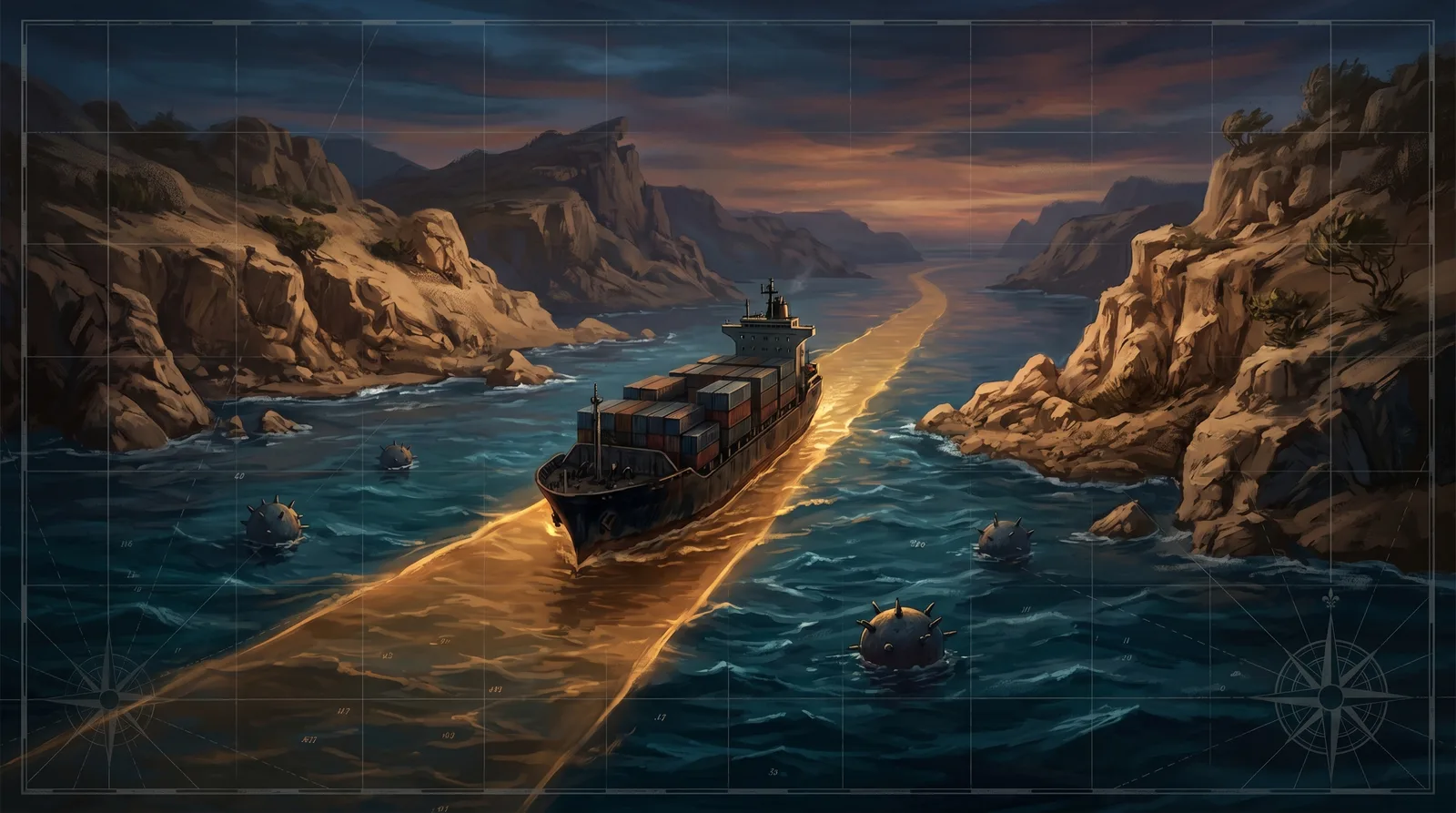
Minesweeper is one of the oldest puzzle games on the planet. You click tiles, you read numbers, you deduce where the mines are. It shipped with Windows. Your dad played it at work instead of working.
We took that 30-year-old logic puzzle and dropped it into the most contested stretch of water on Earth.
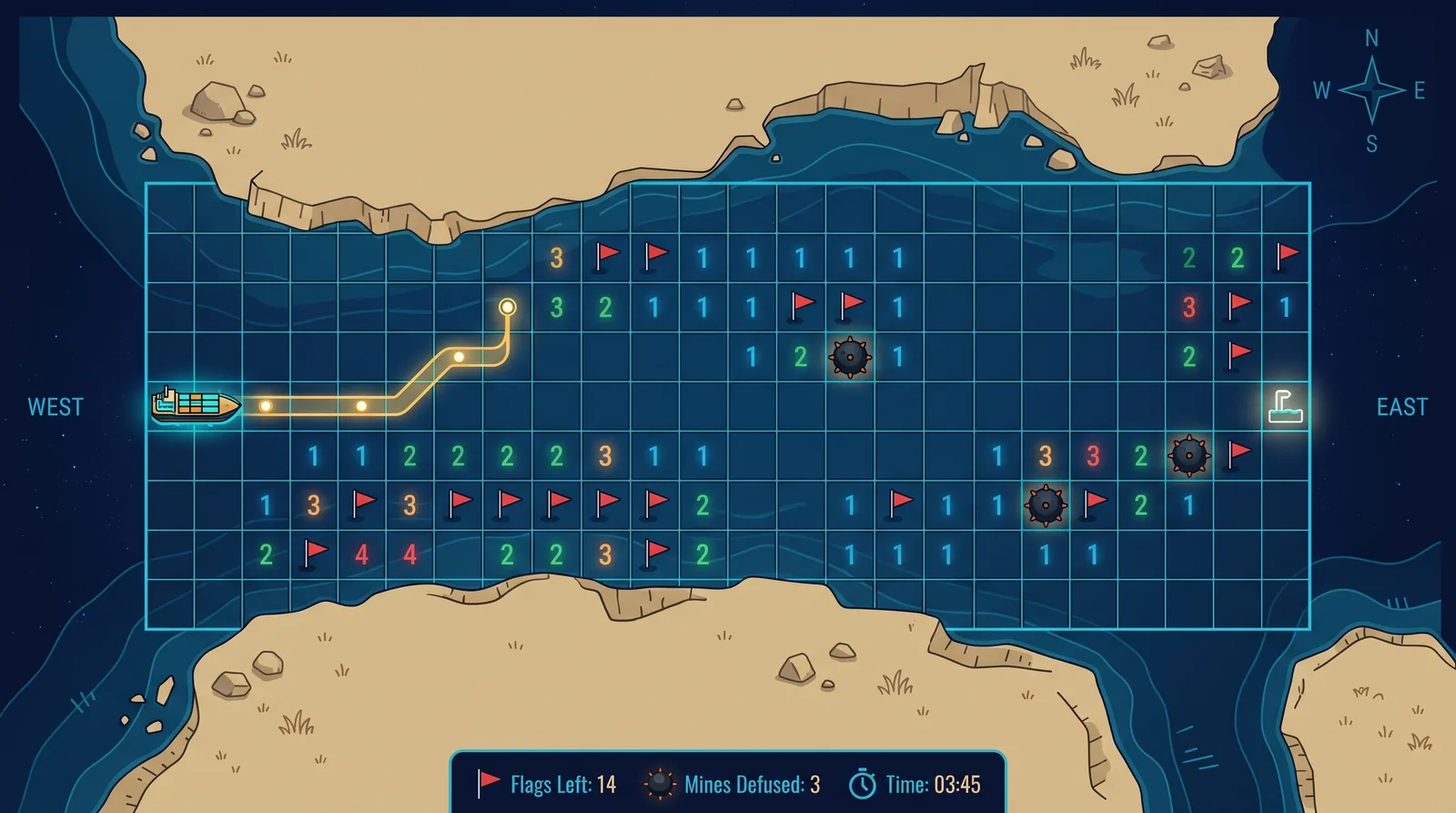
Meet Strait of Hormuz — a free browser game where you don’t clear the whole board. You only have to reason out a safe channel, wide enough to sail a cargo ship through, from the Persian Gulf on the left to open sea on the right. Clear a route and the ship sails itself. Misread a tile and your tanker finds a sea-mine the hard way.
The premise
A fifth of the world’s seaborne oil passes through the real Strait of Hormuz. At its narrowest it’s barely 33 km wide, pinched between Iran to the north and Oman’s Musandam Peninsula to the south. It is, in the most literal sense, a chokepoint — and every few years the news reminds everyone just how narrow it is.
In the game, the strait has been blockaded and seeded with mines. Your job isn’t to fight anyone. It’s to think your way across: read the board, mark the danger, and slip a tanker through the gap.
How it plays
If you’ve ever played minesweeper, you already know 80% of it:
- Tap or left-click open water to sound it. The number that appears tells you how many sea-mines are buried in the eight surrounding tiles.
- Right-click, long-press, or flip on Flag mode to mark a tile you think is mined.
- Use the numbers to deduce which tiles are safe. A “1” touching exactly one unknown tile tells you precisely where the mine is.
Here’s the twist that makes it naval: you don’t need to clear everything. A cargo ship automatically follows the rightmost safe channel you’ve revealed, one tile at a time, always heading for the exit. Open a path and it sails. Reach the right-hand edge — the Gulf of Oman — and you’ve run the blockade.
Two things can sink you. Reveal a mine directly, and it’s over. Or get caught by a homing missile — they lock onto your ship’s position and close in, so the best defence is to keep the ship moving by clearing water ahead of it. Stand still and you’re a target.
Three difficulty levels
- Patrol (beginner) — 22 mines, almost no missile pressure. This is the “learn the game with a cup of coffee” mode. Most runs finish before a single missile shows up.
- Tensions (intermediate) — 55 mines, missiles arrive sooner and faster.
- Blockade (advanced) — 80 mines, and most of the far-side exits are sealed off. Only one or two tiles on the right edge are real exits; the rest are mined. You have to probe the far shore carefully or you’ll sail straight into the trap.
The board is the real strait
Here’s the detail we’re quietly proud of. The land-and-water shape of the board isn’t hand-drawn or AI-imagined — it’s sampled directly from a public-domain NASA satellite image of the Strait of Hormuz, downsampled to the game grid. Iran’s coastline really does run along the top. The Musandam Peninsula really is that triangular landmass jutting up into the middle. Qeshm Island is there, hugging the Iranian shore. The channel bends the way the real one bends.
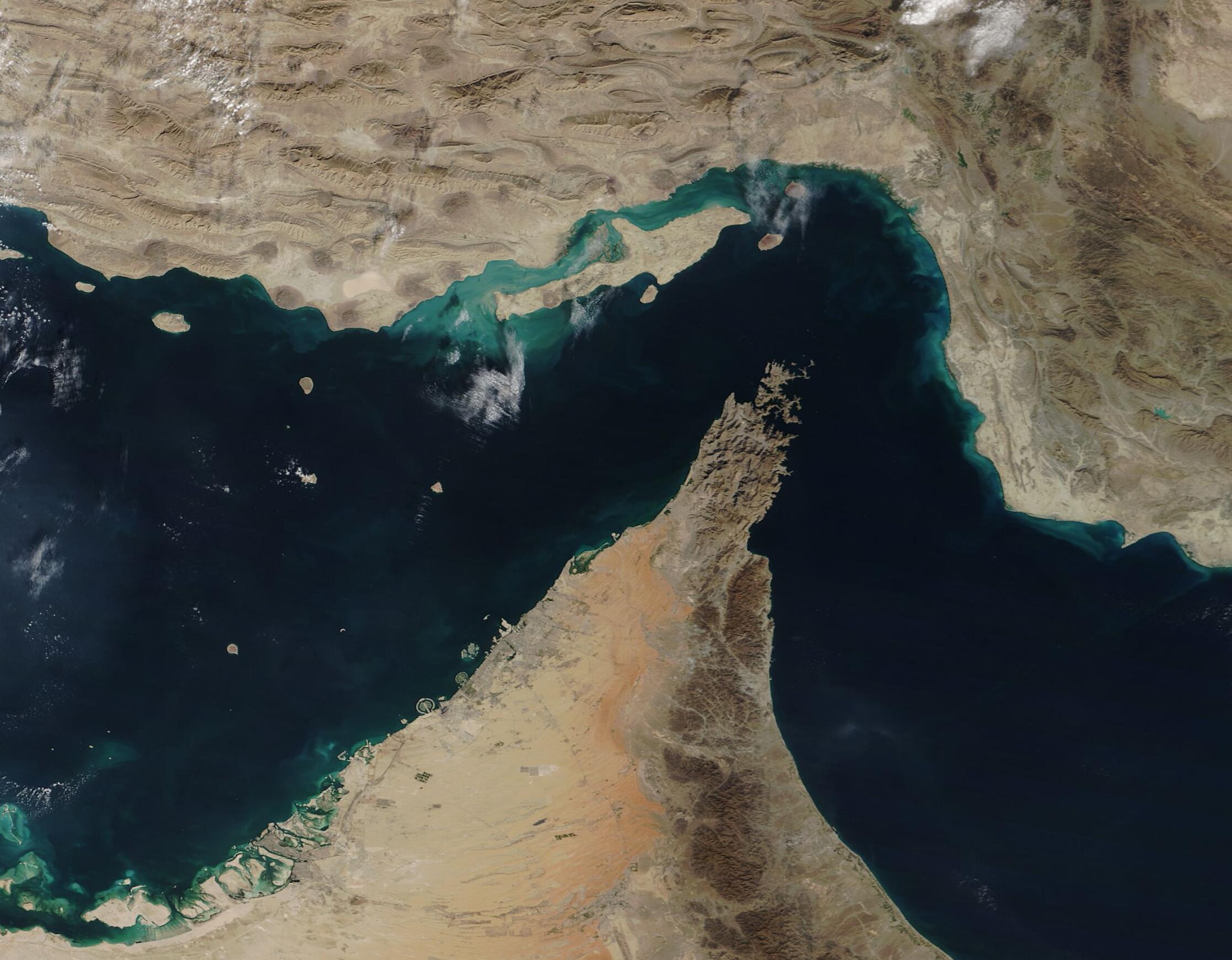
We chose a NASA image specifically because it sidesteps the politics. A satellite photo has no labels, no disputed names, no contested borders — just terrain and water. The geography is exact and nobody has to argue about it.
Why minesweeper, of all things?
Because deduction is the most human thing a game can ask of you. There’s no twitch reflex to grind, no loot box, no algorithm deciding what you see next. It’s just you, a grid of incomplete information, and the slow satisfaction of working out what must be true.
That’s the whole point of The Rebel Arcade: small, hand-built games that ask you to think and feel something, instead of the endless feed of AI slop optimized to keep you scrolling and bored. A logic puzzle you can lose to is more honest than a video you can’t stop watching.
A few tips for a fast crossing
- Your first probe is always safe — the game guarantees it. So open aggressively near the Persian Gulf to build a foothold before you start being careful.
- Chord-click a satisfied number (one where you’ve already flagged all its mines) to clear its remaining neighbours in one move.
- Don’t over-clear. You win by reaching the exit, not by sweeping the whole sea. Every extra tile you flip is another chance to hit a mine for no reason.
- Under missile fire? Pause, plan your next reveal, then resume. The clock and the missiles both stop while you think.
Play it
Strait of Hormuz is free, runs in your browser, and works on desktop and mobile. No downloads, no account, no tracking. Just a grid, a ship, and a strait that wants to sink you.
It sits alongside Circle of Truth, Slop Runner, and the rest of The Rebel Arcade.